
From Clicks to Foot Traffic: How Geofencing Turns Online Ads into Real-World Results
Craig Hadley
Director of Digital Strategy & Insights
When most business owners think about advertising, their thoughts immediately turn to Google Ads despite the often high cost per click. While Google is an excellent platform for search intent and broad awareness, it has some limitations for smaller, one, two, or three-location businesses, especially when it comes to geofencing and the store visit conversion objective.
Recognizing this gap, The Creative Company invested time in researching and testing geofencing platforms that could effectively serve smaller advertisers. Many of the options on the market required spending commitments of $50,000 or more or provided little accountability or hands-on support. Our goal was to find a solution that offered the precision of enterprise systems without the high barrier to entry.
Today, we work with numerous companies and nonprofits that are navigating the digital advertising landscape. While Google Ads is often the first place owners turn, we’ve found that geofencing campaigns can deliver something Google can’t: precision, accountability, and measurable in-store impact.
Why It Matters – Imagine being able to:
- Reach shoppers as they browse in a nearby competitor’s store.
- Target attendees at a local festival and invite them to stop by your location afterward.
- Retarget those same shoppers after they’ve visited your store, reinforcing brand loyalty.
- Measure how many people who saw your ads actually walked through your doors.
This level of targeting and measurement was once out of reach for small businesses, but now it’s not only possible, it’s accessible and cost-effective.
What Geofencing Really Is
Geofencing goes beyond simple radius targeting. Instead of drawing a one-mile circle around your business, geofencing allows us to build precise, custom boundaries around competitor locations, event venues, or specific neighborhoods.
When someone with a mobile device enters that area, they can be served targeted ads. If they later visit your store, that in-person conversion can be tracked and attributed back to your campaign.
Why Google Ads May Not Be Enough
Google Ads does allow radius targeting, but their in-store conversion tracking (known as “Store Visits”) is typically reserved for larger chains. To qualify, a business usually needs:
- 10+ active storefronts across different markets.
- High traffic volume, with hundreds of daily ad interactions and hundreds of in-person visits per month.
- Enough data density for Google to preserve user privacy while providing reliable reports.
That means if you’re running one, two, or even three storefronts, you won’t have access to this feature. The offline attribution tools simply won’t unlock, no matter how much you spend. This creates a gap for local businesses who want to connect the dots between online ads and offline visits.
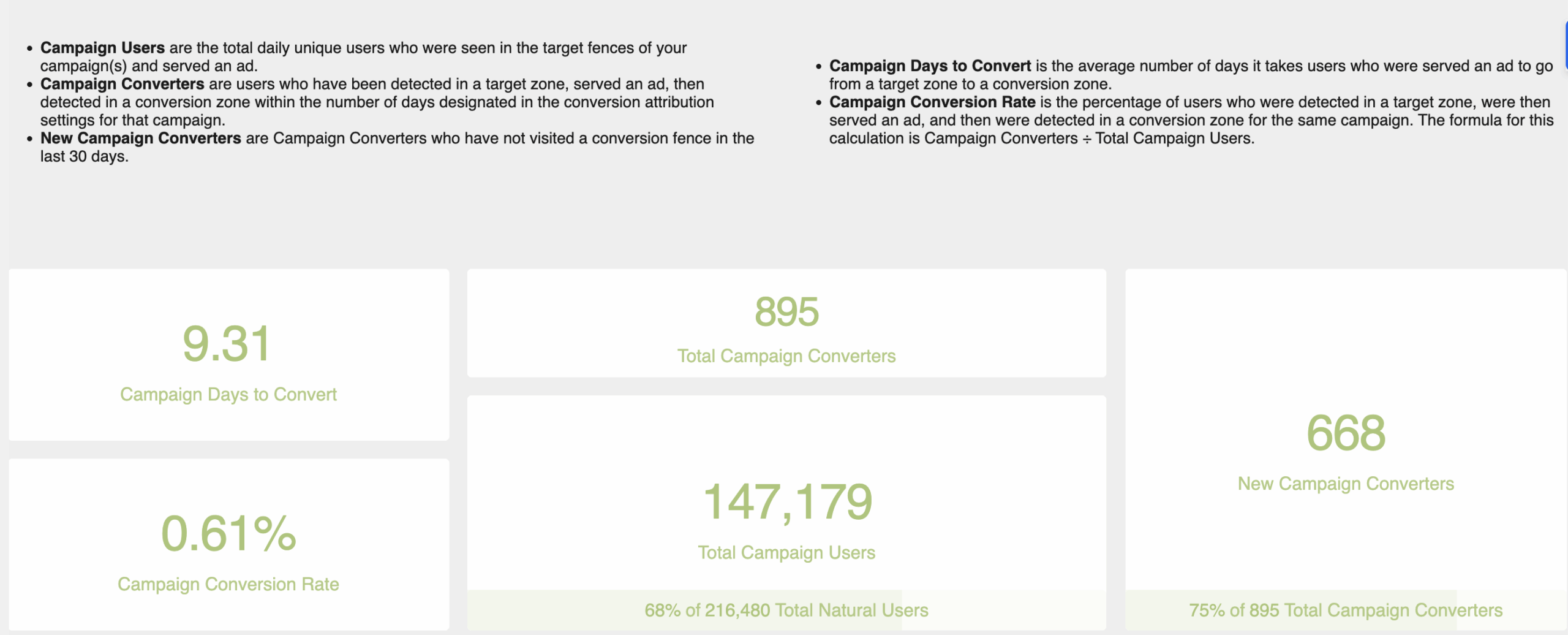
(We provide a huge treasure trove of data and insights into how the campaign is preforming.)
The Alternative: True Geofencing
Through programmatic ad platforms, we can:
- Define exact locations with polygon-level precision (down to a competitor’s building footprint or an event space).
- Serve display, video, and mobile ads to people who enter those zones.
- Track visits to your store via a separate conversion zone, with the conversion objective being a location visit.
- Retarget users who have entered your conversion zone, ensuring they see your brand again and become part of your custom audience for future campaigns.
- Optimize campaigns not just for clicks, but for verified in-store traffic.
For example, The Creative Company recently helped a U.S.-based company maximize the impact of its conference sponsorship. By setting up a geofence around the event venue, attendees who entered the area were automatically added to a digital retargeting audience, enabling the client to continue engaging with them long after the conference ended.
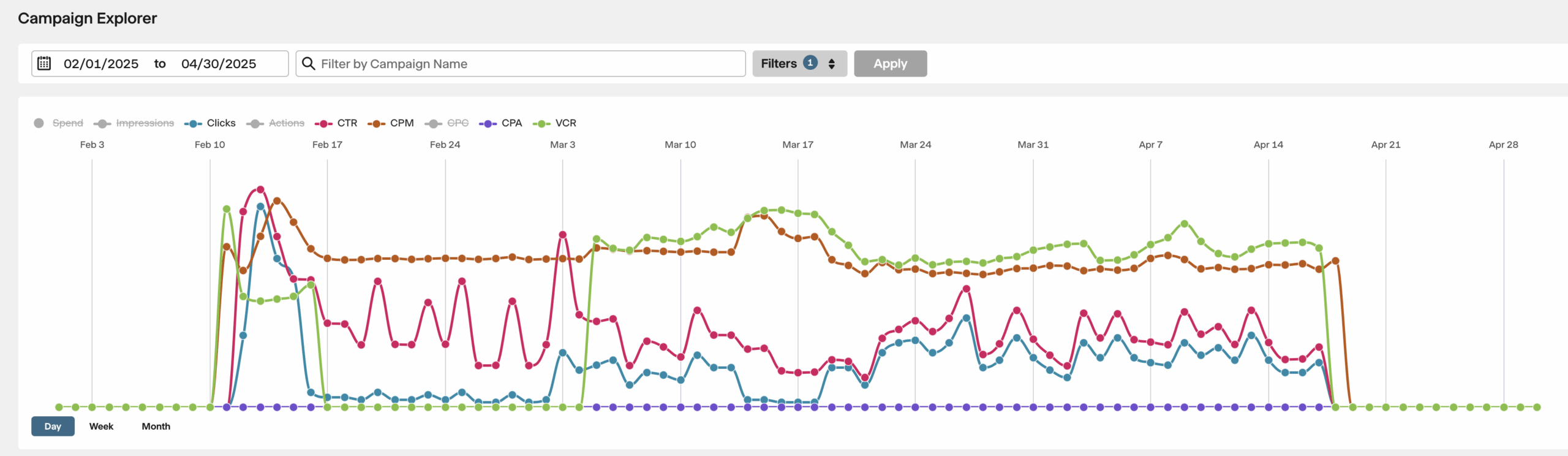
(We can examine each campaign in detail with visits, click-through rates, cost per thousand impressions, and video watch times.)
Creative Requirements
Unlike search ads, geofencing campaigns depend on strong visuals:
- Display Ads: The must-have sizes are 300×250, 728×90, 160×600, and 320×50. Visuals should feature products, storefront lifestyle scenes, or seasonal themes with 5–7 word headlines and a clear call-to-action.
- Video Ads: Short 15–30 second spots can add impact, especially in streaming environments. These should showcase your store, your people, and your products. All videos start muted, so captions and strong visuals are critical.
Streaming video inventory includes popular platforms such as Hulu, Roku, and other connected TV environments, giving your ads the same premium feel as national brands—at a fraction of the cost.
A single photoshoot can often supply creative assets for an entire year of campaigns, making this a cost-efficient investment.
At The Creative Company, our design and video team develops campaign-ready creative assets often from a single photoshoot that supplies visuals.
Cost and Commitment
Programmatic geofencing offers flexibility that traditional media buys can’t. With programmatic:
- Budgets can start as low as a few thousand dollars per month and scale up as needed.
- There’s no requirement to commit to a year-long contract—you can run seasonally, monthly, or continuously.
- Every dollar spent is tied back to measurable performance metrics, including foot traffic.
By comparison, some traditional media options may require significant annual commitments but bundle in professional video production as part of their package. While that has value for brand storytelling, it lacks the precision and attribution that programmatic geofencing delivers.
Key Metrics to Measure Success
Geofencing campaigns are priced and optimized using industry-standard metrics:
- Conversion Zone Visits: The primary KPI—measured when someone exposed to an ad later visits the defined location. Benchmarks often fall between 0.2%–0.5%+ of impressions.
- CPM (Cost per Thousand Impressions): Display averages $4–$8; Connected TV often ranges $12–$18.
- CTR (Click-Through Rate): Display benchmarks are typically 0.1%–0.3%.
- VCR (Video Completion Rate): Connected TV and pre-roll campaigns often achieve 85%–95%+ completion rates.
- Secondary Metrics: Online orders (if applicable), ad frequency, and attribution lift (comparing exposed vs. unexposed audiences).
For example, a $2,000/month campaign in Madison may deliver ~273,000 impressions. At a 0.3% visit rate, that could mean 800+ tracked store visits—real customers you can tie back to your advertising spend.
Takeaways
For local businesses, advertising shouldn’t stop at generating clicks. With geofencing, we can connect the dots between digital impressions, in-store visits, and repeat engagement through retargeting. It’s a smarter way to spend your ad budget, making sure your message reaches the right people at the right time, and ultimately drives them where it matters most..
At The Creative Company, we specialize in helping businesses and nonprofits make the leap from clicks to customers with geofencing strategies that work. If you’re ready to see how this approach could bring more people through your doors, let’s start a conversation.
Geofencing Campaign FAQ
How are “location visits” measured?
We measure visits when a device that saw or clicked an ad later enters the location geofence (our defined “conversion zone”). This confirms real, physical traffic driven by the campaign.
What defines a “conversion”?
A conversion occurs when a device crosses a location geofence after being exposed to an ad. We can also filter out passersby by setting dwell-time thresholds (e.g., must stay X minutes) and exclude frequent or employee devices so only infrequent visitors—actual potential customers—are counted. If desired, we can also layer in digital actions like form-fills or appointment requests for deeper conversion tracking.
Will a wider target waste impressions?
Not with proper setup. We’ll limit delivery to your ideal service radius, prioritize top ZIP codes, and continuously optimize, shifting budget away from under-performing areas or audiences mid-flight. Ads are only served to those in the target audience that we built out.
What can we do if a tactic underperforms?
We pause or reallocate budget, adjust targeting, refresh creative, or tighten geos. Campaigns are optimized by the UI daily and manually by our team, so poor-performing tactics are quickly corrected.
What are the benchmarks for success?
Success will be measured by the number of location visits tracked through the conversion zone, supported by engagement metrics across all channels.
Primary KPIs:
- Location visits (devices entering the geofence after ad exposure)
- Completed form submissions on the website (optional)
Performance Scenarios:
- Good (Conservative): ~0.20% visit rate
- Better (Expected): ~0.35% visit rate
- Best (Aggressive): ~0.55%+ visit rate
Secondary KPIs:
- CTR: 0.10%–0.20% for Display; 0.40%+ for Pre-Roll
- VCR: 85%–95% for CTV/Pre-Roll
- CPM Efficiency: Maintain blended CPM below ~$8
- Reach & Frequency: ~4 Display impressions + 1 CTV view per household per week
Overall success = consistent month-over-month lift in location visits, efficient CPM delivery, and strong engagement (CTR/VCR) within targeted locations.

Craig Hadley
Director of Digital Strategy & Insights at The Creative Company
Other Recent Articles:
- Say Goodbye to Review Gating & Hello to Operational Intelligence
- Would an AI vouch for you?
- When “AI This” and “AI That” Isn’t Enough
- From Clicks to Foot Traffic: How Geofencing Turns Online Ads into Real-World Results
- Should QR Codes be Part of Your Video Marketing? Lessons from the Super Bowl
- Breaking Up is Never Easy – Goodbye Andes Candies (It was us, not you)
- Revitalize and Reignite Your Content Strategy: A Guide to Content Republishing