
Say Goodbye to Review Gating & Hello to Operational Intelligence

Craig Hadley
Director of Digital Strategy & Insights
AI, Google’s TOS, and FTC Enforcement Are Changing Online Reviews
Online reviews have become one of the most influential signals in digital marketing. They shape how customers perceive businesses, influence local search rankings, and increasingly feed the data that artificial intelligence systems use to interpret companies.
But the rules governing how businesses collect and manage reviews have changed significantly in recent years.
Many companies still rely on strategies that were once common in reputation management, particularly filtering negative feedback before customers reach a public review site. What many organizations don’t realize is that these approaches increasingly conflict with both platform policies and federal regulations.
Understanding how review systems work today is essential for any business managing its online reputation.
What is Review Gating?
Review gating is a process in which a customer who provides positive feedback is invited to leave a public review, while a customer who provides negative feedback is routed to private feedback.
This practice was used by businesses to filter out negative feedback and keep public ratings high, but it distorted the picture of actual customer sentiment.
Is Review Gating Over?
For years, many companies used review gating. The workflow typically looked like this:
- A customer receives a satisfaction survey.
- If the response is positive, they are invited to leave a public review.
- If the response is negative, they are routed to private feedback instead.
This approach allowed businesses to collect useful internal feedback while maintaining high public ratings.
The problem is that it also distorted the picture of customer sentiment.
As a result, many leading reputation platforms, including BrightLocal, Podium, Birdeye, Reputation.com, and GatherUp, have moved away from supporting review gating to remain aligned with platform policies and regulatory expectations.
Most modern systems now force all customers to leave public reviews, even if they first provide internal feedback.
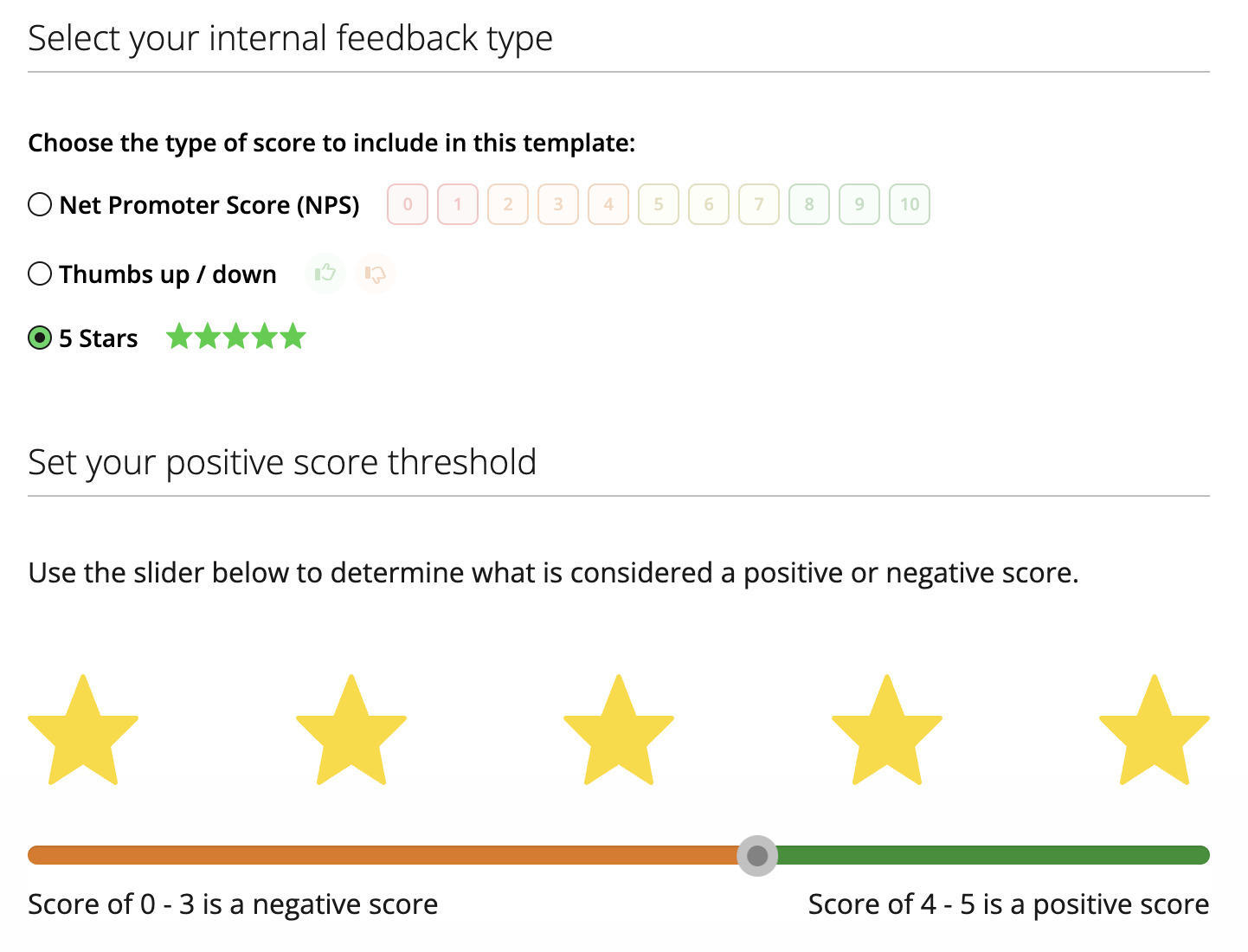
(No matter the feedback type and score, all options must use the same “leave a review” experience.)
Google’s Policy (TOS) on Review Gating
Google regulates review behavior through its Maps User-Generated Content Policy. The policy specifically prohibits businesses from manipulating how reviews are collected. It states that businesses may not:
“Discourage or prohibit negative reviews, or selectively solicit positive reviews from customers.”
This policy targeted the widespread practice known as review gating, where businesses attempted to filter out negative feedback before directing customers to platforms like Google Reviews.
In practical terms, this means businesses cannot structure review requests in a way that prevents dissatisfied customers from sharing their experiences publicly.
Violations can result in:
- removal of all reviews
- reduced visibility in local search
- suspension of a Google Business Profile
Because Google dominates local search, this policy has had a significant impact on how reputation platforms design their workflows.
Federal Regulation Is Now Involved
Platform policies (like Google’s) are only half the battle. In late 2024, the Federal Trade Commission (FTC) finalized the Consumer Review Rule (16 CFR Part 465), and in early 2026, we are seeing the first wave of heavy-handed enforcement. The rule explicitly prohibits:
- Review Gating: Using software to “filter” out negative reviews before they are posted.
- Fake/AI-Generated Reviews: Using “bots” or AI to write customer testimonials.
- Insider Reviews: Employees or relatives posting without clear disclosure.
- Suppression: Hiding reviews simply because they are critical.
- The Stake: The FTC now has the authority to pursue civil penalties of up to $53,088 per violation. This applies to local service providers and healthcare practices just as much as it does to retail giants.
The Precedent: Retailer Fashion Nova was required to pay $4.2 million in a settlement after the FTC alleged they blocked hundreds of thousands of negative reviews. In 2026, the FTC is using that case as the blueprint for monitoring mid-market businesses.
How Review Customer Feedback Platforms Have Adapted
Because of Google’s policies and increased regulatory scrutiny, most reputation platforms have redesigned their systems.
Platforms such as BrightLocal, Podium, Birdeye, Reputation.com, and GatherUp have moved away from supporting traditional review gating in order to remain aligned with Google’s review policies and evolving FTC guidance.
Rather than blocking negative reviewers, these systems now typically use a two-step workflow:
- Collect internal feedback or a satisfaction rating.
- Provide the option to leave a public review regardless of the score.
This allows businesses to capture operational feedback while remaining compliant with platform policies.
The shift is subtle but important: reputation management is moving away from filtering reviews and toward understanding them.
Treat Reviews as Operational Intelligence
Reviews are one of the most direct forms of customer feedback available. Organizations that benefit most from review data treat it as operational insight, not just marketing content. Patterns in review text often reveal:
- customer confusion about policies
- recurring service friction
- onboarding gaps
- opportunities to improve processes
When businesses analyze review patterns regularly, reviews become an early-warning system for service issues.
In many cases, recurring review themes highlight problems long before they appear in traditional reporting or customer service metrics. Companies that pay attention to these signals can address operational issues early—improving both customer experience and future reviews.
The New Factor: AI Is Mining Your Reviews
Another reason reviews matter more than ever is the rise of artificial intelligence. Search engines and AI systems increasingly analyze review content to understand businesses. Review data now influences:
- local search rankings
- AI-generated search summaries
- customer sentiment analysis
- perceived service quality
Large language models and search algorithms analyze patterns within review text to identify:
- recurring service issues
- customer satisfaction trends
- operational strengths and weaknesses
In other words, reviews are no longer just social proof. They are structured data that machines use to evaluate businesses.
Trying to filter or manipulate that data becomes increasingly risky in an AI-driven search environment.
What Businesses Should Do Now
Because review gating is no longer viable, businesses need to rethink how they approach reputation management. Instead of trying to control which reviews appear publicly, organizations should build systems that continuously generate authentic customer feedback.
- Assume all feedback will become public. Modern review platforms typically allow customers to leave public reviews regardless of sentiment, which means almost any feedback interaction can surface online. Clear communication, consistent service processes, and fast issue resolution are now essential parts of reputation management.
- Recognize that AI reads the language of reviews. Search engines and AI systems increasingly analyze review text to understand customer sentiment, service quality, and recurring issues. Over time, the words customers use in reviews may influence how businesses are interpreted in search results and AI-generated summaries.
- Build systems that generate review velocity. Search platforms increasingly evaluate review freshness and frequency, not just average rating. A steady stream of authentic feedback signals that a business is active, responsive, and trusted.
Online reputation can no longer be engineered by filtering feedback.
Between Google’s policies, FTC regulations, and the rise of AI-driven search, authenticity has become the most sustainable strategy. Businesses that build systems to generate, analyze, and respond to real customer experiences will develop the strongest and most credible reputation over time.

Craig Hadley
Director of Digital Strategy & Insights at The Creative Company
Other Recent Articles:
- Say Goodbye to Review Gating & Hello to Operational Intelligence
- Would an AI vouch for you?
- When “AI This” and “AI That” Isn’t Enough
- From Clicks to Foot Traffic: How Geofencing Turns Online Ads into Real-World Results
- Should QR Codes be Part of Your Video Marketing? Lessons from the Super Bowl
- Breaking Up is Never Easy – Goodbye Andes Candies (It was us, not you)
- Revitalize and Reignite Your Content Strategy: A Guide to Content Republishing